How history still moves students today: a Berlin history school trip with Dene Magna
Time to read
Dene Magna School didn’t need persuading. A Berlin history school trip was the obvious choice for their students: German history, the Cold War, division and reunification, mapped directly onto their GCSE curriculum, all waiting in the streets and buildings of a city that has never tried to hide what happened to it. Dene Magna School has now been to Berlin with Travelbound three times. And the school team booked their fourth shortly after their return.
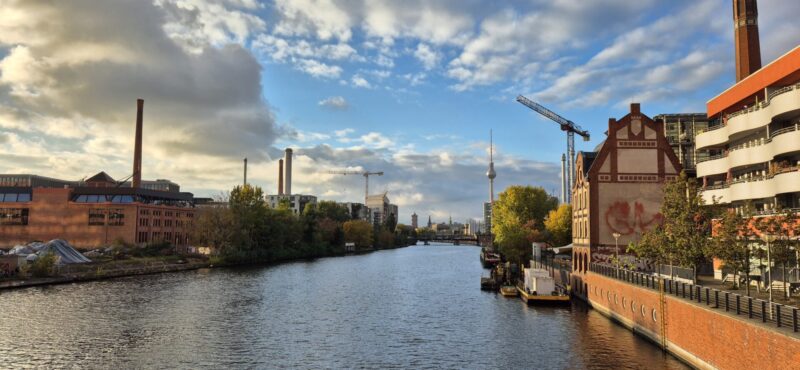
A city that teaches itself
For the history teachers at Dene Magna, the decision was never just practical. “Berlin was always our first choice,” they explain, “as it fits very well with our programme of GCSE study to consider both German history and the Cold War.” But the goal was always more than curriculum coverage, it’s about how they want their students to feel.
“
We wanted them to see textbook examples in real life and connect with them
Dene Magna

Sachsenhausen is where that tends to happen most quietly. Walking the site, the group fell into a reflectiveness the teachers describe as different from anything they see in a classroom, a kind of stillness that produced some of the most considered questions of the whole week. The Topography of Terror, visited without a guide so students could navigate it on their own terms, prompted the same quality of engagement.

And a visit to The Jewish Museum added something further – perspectives on Jewish history and the Holocaust that extended beyond what had been covered in class, leaving students with more to think about than they had arrived with.
Interested in more history trips?
Read about history school trip to Ypres
At the Berlin Wall Memorial, the physical scale of what once divided the city made the Cold War real in a way no map or photograph achieves. At the East Side Gallery, students talked about meaning, imagery and how a country processes what it has been through.
“
They were able to link Germany’s past to the current world, and how unity is always better than division.
Dene Magna

Is Berlin a good destination for a GCSE history school trip?
Yes, and more directly than almost any other European city. The GCSE curriculum for German history and the Cold War is no longer abstract, it’s brought to life in Berlin. Every major site on this well-built itinerary corresponds to something students have already studied. That connection is what turns a good trip into one that changes how students engage with a subject when they are back in the classroom.
Dene Magna’s teachers noticed this shift.
“
Watching students’ realisations of seeing what they know in real life is a great thing to observe, and they continue to talk about their experiences and the links they made in the lessons that follow.
Dene Magna

The Discover Berlin walking tour brought the group to places the teachers themselves would not have found. The Reichstag impressed students with how deliberately it mixes old architecture and modern democratic purpose. The DDR Museum and Stasi Prison completed the picture of life on both sides of the Berlin Wall. The Stasi Prison guide earned a particular mention: “His ability to transport the students, and us, to East Germany whilst we toured the site was impressive.”

On a packed final day, before the journey home, the students were still completely engrossed.
Getting the balance right
A week of this quality of history can be a great deal for students to carry. Dene Magna’s teachers made a deliberate decision to include the Final Escape Room Berlin. A chance to decompress after the most emotionally demanding day of the trip, to connect socially, and for staff to spend time with students outside a formal setting. Timing added an unexpected bonus: the group were in Berlin during the Festival of Light, and an unplanned evening walk to see the city illuminated became one of those moments that stays with a group long after everything else has settled.
If you are weighing up what structured excursions can add to different subjects, Travelbound’s article on how curriculum visits deepen understanding, including their Year of the Normans excursion, explores similar territory.
Get in touch with the team to find out how a Berlin trip could work for you.
Thinking about a history trip to Berlin for your school?
Frequently asked questions
How does visiting Berlin support students’ history curriculum?
Seeing sites in person changes the way students engage with content they have studied. Schools consistently report that students continue referencing their Berlin experiences in class long after they return, making connections between what they saw and the topics they go on to cover. For Dene Magna, that effect was visible in lessons immediately on their return.
What historical sites can students visit on a school trip to Berlin?
A Travelbound Berlin history itinerary typically includes Sachsenhausen, the Topography of Terror, the Jewish Museum, the Berlin Wall Memorial, the DDR Museum, the Stasi Prison, and the Reichstag, alongside a Discover Berlin guided walking tour and the East Side Gallery. Every visit is chosen for curriculum relevance, and itineraries are built around your group’s specific learning goals.
Is Berlin a good destination for a GCSE history school trip?
Berlin is one of the strongest curriculum destinations available for GCSE history groups. The city maps directly onto German history and Cold War content: Sachsenhausen, the Berlin Wall Memorial, the Stasi Prison, the Reichstag, and the East Side Gallery all correspond to material students will have already studied in class. The learning is immediate and tangible in a way that is difficult to replicate elsewhere.

